Home › Emergency and Disaster Commercial Demolition
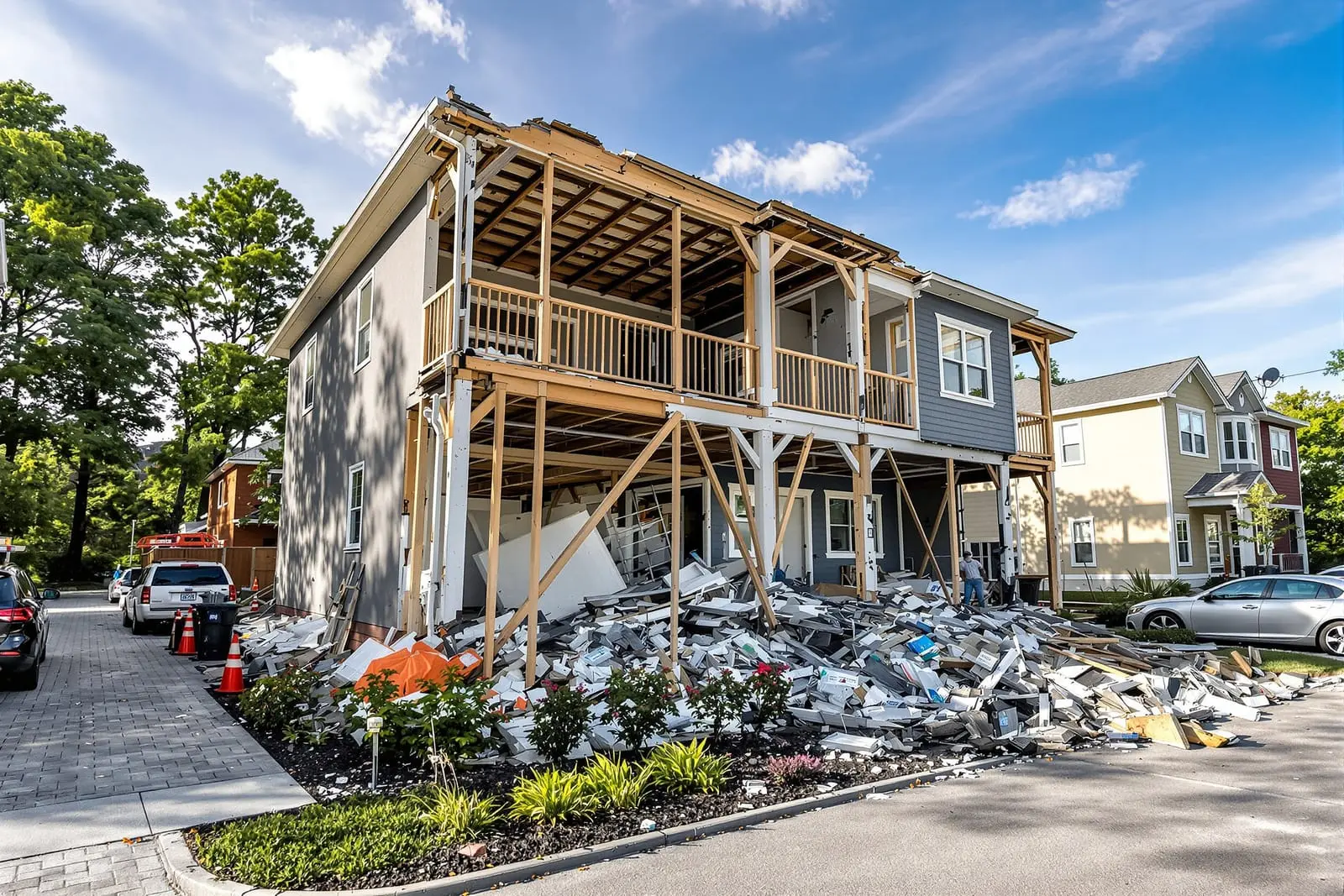
We provide emergency commercial demolition in Nashville, TN after fires, storms, or structural failures damage business properties. Our team quickly assesses hazards, stabilizes unsafe areas, and removes compromised structures in coordination with owners and insurers. Fast response and careful debris handling help you restore operations as soon as possible.
Wrexo Demolition Nashville provides professional emergency commercial demolition throughout Nashville, TN and the surrounding area. Our licensed, insured crew delivers safe, clean, on-time work with a free estimate before anything begins. Call (629) 316-3265 or request your free quote.
Emergency Commercial Demolition When Minutes Matter
When a storm, fire, structural failure, or vehicle impact hits your building, you do not always have the luxury of a long planning process. Wrexo Demolition Nashville provides true emergency commercial demolition across the Nashville area, including downtown high‑rises, older brick storefronts in East Nashville, warehouse spaces in the Nations, and small office buildings in the suburbs.
Our first priority is life safety and stabilizing the site. On an emergency call, we dispatch a crew lead who is certified in hazard recognition and a small team equipped for rapid assessment. Once they arrive, they coordinate with Metro Nashville Fire, Metro Codes, insurance adjusters, and, when needed, structural engineers you already have on the project. If you do not have an engineer involved yet, we can connect you with local professionals who are used to working on fast moving loss sites.
Not every disaster requires tearing down the whole structure. Often we perform targeted emergency commercial demolition: removing a collapsed roof bay in a warehouse so forklifts can safely recover inventory, pulling away fire compromised sections of a strip mall to prevent a secondary collapse, or cutting out a damaged stair tower in a hotel so temporary egress paths can be created. We focus on preserving what can be saved without slowing down what must come down immediately.
Because Nashville sees both severe weather and older building stock, we see recurring patterns: tornado shears roofs off metal buildings, high winds twist billboard supports into adjacent structures, and water intrusion from fire hoses weakens already stressed masonry. Our crews are trained to recognize these local failure modes and to make demolition decisions that keep the rest of your property, and your neighbors, as safe as possible.
How Our Emergency Demolition Process Works in Nashville
Emergency commercial demolition has a different tempo than a scheduled teardown, but it still follows a disciplined process. When you call Wrexo Demolition Nashville, we start with a quick intake: your address, the immediate hazard you are seeing, what kind of business or occupancy the building has, and whether utilities have been shut off.
On arrival, we perform a walk‑around and interior survey where it is safe to enter. We look for signs of imminent collapse such as bowing walls, sagging roof members, separated floor decks, or debris that is hanging under tension. We also identify utility hazards specific to your building type: gas risers at restaurant pads, refrigeration lines in grocery or cold storage facilities, or live electrical feeds in multi‑tenant office buildings.
Next we work with you and any authorities on site to define the emergency scope in clear terms. That might be: remove the north wall and roof bay over units 101 to 105 to eliminate collapse risk over the sidewalk, or clear and flatten the loading dock area so emergency shoring crews can set up safely tomorrow. This written scope keeps everyone on the same page during a chaotic situation.
We then bring in the right equipment from our Nashville yard. For tight urban lots along Broadway and SoBro, we rely on smaller excavators, skid steers with demolition grapples, and manual cutting tools. For industrial sites in areas like La Vergne or Madison, we may deploy large excavators with concrete processors, high reach arms for upper stories, and hydraulic hammers. All debris is pulled inward toward the footprint of the damaged structure whenever possible so we do not push damage into sidewalks, streets, or neighboring businesses.
Throughout the work, our crew lead continuously reassesses conditions. If we uncover unexpected structural movement or hazardous materials, we pause, consult with you and any engineers on the project, and adjust the plan before proceeding. This disciplined approach is how we move fast without creating new problems that will slow your rebuild later.
Disaster Situations We Handle Most Often
Nashville properties face a mix of natural and man‑made disasters, and each one affects how emergency commercial demolition should be approached.
Storm and tornado damage: After the 2020 tornadoes, many local owners learned how unpredictable wind damage can be. We regularly respond to metal buildings where entire wall panels are peeled away, shopping centers with parapet walls that toppled inward, and office roofs that have partially lifted. In these cases we focus on safely bringing down any remaining loose cladding, signage, and rooftop units before the next storm pushes them off.
Fire and smoke damage: For restaurants, music venues, and hotels, fire is a common reason for an emergency call. Fire may only affect a portion of the building, but the steel can lose strength and concrete slabs can spall from heat. We coordinate with fire investigators and your insurance representative so that any required origin and cause investigation is complete before we remove fire affected areas. Then we perform selective demolition to cut away charred framing, unstable brick, and damaged roof sections so restoration contractors can move in quickly.
Vehicle and equipment impact: In busy areas like West End and around interstates, we see vehicles hit storefronts and loading docks. At distribution centers, it is not unusual for a truck or forklift to damage structural columns or dock walls. Our team shores and braces around the impact zone when necessary, then removes compromised members to eliminate the immediate risk. We also help clear mangled dock equipment and racking so your operations team can plan temporary logistics workarounds.
Water and collapse risk: Long duration water exposure from burst mains, flooded crawlspaces, or failed roof drains can quietly undermine a commercial structure. We are often called when a section of floor has already sagged or when large areas of ceiling have dropped. In these cases we may need to open controlled demo paths through finishes to expose structure, then remove joists, decking, or slab sections that are no longer safe.
What Affects Cost and Timeline for Emergency Commercial Demolition
In an emergency you still need clear expectations around cost and schedule. Wrexo Demolition Nashville is straightforward about what drives the price so you can talk realistically with your insurer, lender, or ownership group.
Scope and access: The more of the structure that must come down and the harder it is to reach, the higher the cost. A small partial demolition at a one story strip center with open parking lot access will be less than a multi story office with limited alley access downtown. Tight Nashville sites often require more hand work and smaller machines, which can increase labor hours.
Building construction: Tilt‑wall concrete, structural steel with metal deck, unreinforced masonry, and heavy timber all behave differently during demolition. For example, older brick buildings in Germantown without proper reinforcement demand slower, more controlled work so walls do not fall in unintended directions. Structures with heavy rooftop units or complex mezzanines can also require more careful sequencing.
Hazardous materials and special wastes: If we suspect asbestos in roofing, pipe insulation, or floor tile, or lead in paint, work must pause until testing is completed. If tests come back positive, abatement has to be integrated into the plan and performed by a licensed abatement contractor before or during demolition. Similarly, damaged coolers, fuel tanks, or chemical storage in industrial buildings may add pump‑out and disposal costs.
Debris management and recycling: Emergency commercial demolition creates a mix of concrete, metal, wood, and sometimes food or inventory waste. Where possible we separate metal on site and send clean concrete for recycling, which can offset some hauling costs. Contaminated debris, such as food products from a flooded grocery store or smoke soaked contents, may require special handling and higher tipping fees at landfills.
Timeline: Genuine life safety work begins immediately after basic approvals, sometimes within hours of your call. Secondary tasks like full slab removal, complete structure takedown, or additional selective demolition are then scheduled over days or weeks. Weather, utility disconnects, and permit needs can all affect duration, but we will give you an honest, written estimate and update it as conditions change.
What Nashville Owners Should Do Before and During an Emergency Demolition
The choices you make in the first 24 to 72 hours after a disaster can save or cost you a lot of time and money. Here are practical steps Wrexo Demolition Nashville recommends for local commercial owners.
Before you ever need us, know your basic building details and keep them handy: construction type, year built, any known asbestos reports, and the locations of main utility shutoffs. When something goes wrong, being able to tell us and the fire department where your gas and electric shutoffs are located can prevent secondary damage.
As soon as it is safe, take wide and close photos and short videos of all affected areas from multiple angles. Insurers in the Nashville market often rely heavily on this visual record because emergency commercial demolition sometimes destroys the very evidence of damage. We will also document conditions, but your early photos support your claim.
Contact your insurance carrier as early as possible and ask specifically what demolition work they consider emergency, versus what they see as rebuild prep. We are used to talking directly with adjusters from carriers that serve Tennessee and can help explain why certain structural elements must be removed now rather than later.
During the work, designate a single decision maker for our crew to communicate with. Disaster scenes attract many voices, from tenants to neighboring owners, and mixed directions can slow everything down. Your representative can walk the site with our supervisor at the start and end of each day so there are no surprises.
Finally, think ahead to your rebuild while we are still demolishing. Let us know if your architect or contractor wants certain slabs, foundations, or utility lines preserved. We can often modify cut locations or debris staging so your reconstruction team in Nashville can move faster when they mobilize.
“
Professional emergency and disaster commercial demolition, done right the first time, quality materials, honest pricing, and results that last.
Wrexo Demolition Nashville
Emergency and Disaster Commercial Demolition Across Our Service Area