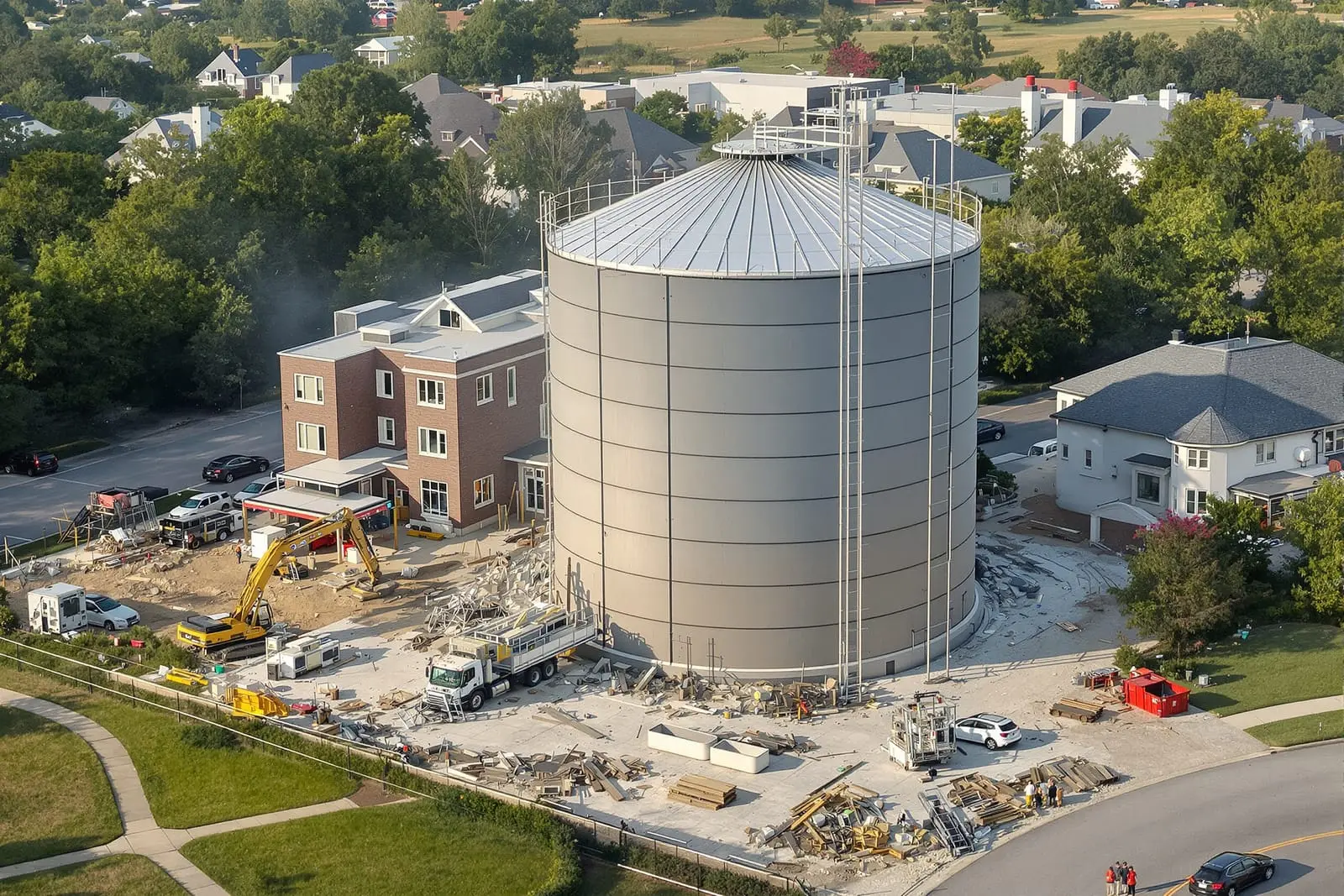
We perform specialized tank demolition in Nashville, TN for industrial plants, farms, and utilities. Our crews cut and lower steel tanks, silos, and smokestacks using controlled methods that protect nearby equipment and buildings. From cleaning and purging to final scrap processing, we manage each step safely and efficiently.
Wrexo Demolition Nashville provides professional tank demolition throughout Nashville, TN and the surrounding area. Our licensed, insured crew delivers safe, clean, on-time work with a free estimate before anything begins. Call (629) 316-3265 or request your free quote.
Tank, Silo and Stack Demolition in Nashville, Done the Right Way
Removing tanks, silos, and stacks is not a simple teardown. These structures are tall, heavy, and often tied into live facilities, process lines, and power. Wrexo Demolition Nashville focuses on this type of work every week, so we know how to keep your people, your neighbors, and your operation safe while the structure comes down.
We work across Middle Tennessee on projects like old fuel tanks at industrial sites, concrete grain silos on the outskirts of town, and steel exhaust stacks at older manufacturing plants inside Davidson County. Local experience matters. Soil in Nashville can shift from rock to fill dirt in a few feet, which affects how a structure behaves once cuts start. We also factor in wind patterns on open hilltops versus tight urban corridors when planning the fall direction and crane sizing.
If you are planning to retire aging storage or process equipment, we can come out, walk the site, and explain how the removal would actually be sequenced. You will know where we plan to cut, how we will control dust and noise, and how we will protect nearby buildings, utilities, and public streets before any contract is signed.
How Tank Demolition Really Works, Step by Step
Tanks come in many forms in the Nashville area: above ground fuel tanks, process vessels at manufacturing plants, and water or chemical tanks at commercial sites. The method we select at Wrexo Demolition Nashville depends on tank size, contents history, and proximity to other structures.
First, we verify what has been stored in the tank. This is not a paperwork formality. It determines whether we bring gas meters, explosion proof tools, and special PPE, and whether we need to inert the atmosphere inside the tank with nitrogen or ventilate for several hours. We coordinate with certified cleaners when residual product must be removed or if sludge at the bottom is hazardous.
Once the tank is clean and safe, we isolate and cap all feed and discharge lines, steam lines, and electrical connections. At many older industrial sites around Nashville, plans do not match what is actually in the ground. We physically trace lines and use ground scanning to avoid cutting into live or abandoned, still charged conduits.
For horizontal tanks, we often support the shell with cribbing, then use cold cutting (saws and shears) to open safe access points. For vertical field welded tanks, we may use a top down approach, cutting rings or panels from the roof and walls, lowering them with a crane. In tighter sites, we may employ hydraulic shears on an excavator to gradually bite the tank into manageable pieces.
Throughout, a ground guide maintains an exclusion zone that keeps workers and third parties out of swing and pinch areas. Sparks, fumes, and noise are controlled with fire watches, portable ventilation, and, where needed, limited work windows to respect local noise expectations near residential or mixed use areas.
Specialized Demolition for Silos Across Middle Tennessee
Silo demolition around Nashville is often more complex than tank work. Concrete grain silos, feed silos at farms, and aggregate silos at batch plants are tall, rigid cylinders that can cause major damage if they rotate or fall unexpectedly.
At Wrexo Demolition Nashville, we start with a structural assessment. We identify spalling, rebar exposure, and prior repair patches that might cause an unpredictable collapse once we begin cutting. Many agricultural silos around Nashville and surrounding counties have hidden steel hoops or reinforcement that must be accounted for when choosing cutting tools and machines.
There are several ways to take down a silo. If there is enough clear space, we may carefully engineer a controlled fall. This involves selective cutting or breaking at the base and using equipment to guide the direction of collapse into a pre cleared zone. For sites with nearby barns, active plants, or powerlines, we often go with a piece by piece method, using a high reach excavator with a crusher or hammer to bite away sections from the top down.
We also address what is inside the silo. Old grain, feed, or product often has mold, combustible dust, or limited oxygen pockets. Before demolition, we ventilate, test air quality, and in some cases vacuum out residual material. This reduces dust plumes that could bother neighbors, especially on windy days on open land in the Nashville outskirts.
Finally, we evaluate the foundation. Many concrete silos have deep footings that need to be broken and removed before a site can be repurposed for new construction or parking. We can crush and process this concrete into reusable fill or coordinate hauling it to an appropriate local recycling facility.
Stack Demolition for Industrial and Commercial Facilities
Stacks and chimneys in the Nashville area range from small masonry restaurant stacks to tall steel exhaust stacks at industrial plants and hospitals. Their height, slender profile, and connection to operating systems make them one of the more technical demolition tasks.
For steel stacks, Wrexo Demolition Nashville typically uses a crane assisted dismantling approach. We rig the upper section of the stack, burn or cold cut a segment loose, and lower it in controlled pieces. This avoids an uncontrolled fall that could damage rooftops, chillers, or nearby utilities. For very tall stacks, we may build a work platform or use man lifts with fall protection to access cut points.
Masonry stacks or chimneys often require mechanical removal using a high reach excavator or manual dismantling from the top down. We remove liners, duct connections, and dampers, then carefully work the outer shell down, managing brick and debris to prevent it from spilling beyond the protected work area. Dust control is vital in dense corridors of Nashville, so we use misting cannons and close coordination with building operations to avoid impacting air intakes.
Interior or rooftop stacks require detailed planning of crane placement, street or lane closures, and lift paths. We work with Metro Nashville for traffic and sidewalk safety measures when needed and schedule lifts to limit disruption to tenants, patients, or operations in active buildings.
Pricing, Permits, and What Drives the Cost in Nashville
Tank demolition, silo removal, and stack dismantling do not have flat, one size pricing. Wrexo Demolition Nashville builds each proposal off a detailed site visit and a clear scope so you are not hit with surprises mid project.
The biggest cost drivers are height, access, and previous contents. A small, ground level, water only tank in an open yard is much simpler and cheaper than a tall former fuel tank tucked between operating buildings. Hazardous or flammable residuals drive the need for specialty cleaning, testing, and monitoring, which increases cost but protects everyone on site.
Access around the structure is another major factor. If we can get a standard excavator, trucks, and possibly a crane close to the work, time and crane sizes are reduced. Tight downtown Nashville locations, rooftop equipment, or sites with limited laydown area may require smaller equipment, night or off hour work, or complex rigging, which affects price.
Permitting and coordination also come into play. Certain demolitions require Metro Nashville approvals, erosion and sediment control if soils are being disturbed, and sometimes utility company coordination for temporary shutoffs or relocations. We handle the demolition permitting and can assist you in understanding any environmental or code related obligations tied to the former use of the tank, silo, or stack.
During our walkthrough, we will point out specific items that influence cost, such as asbestos containing insulation on stacks, lead based coatings inside older tanks, or difficult access around aging farm silos. You get a written scope that clearly states what is included, what assumptions we are making, and what could change the price so you can plan your budget realistically.
What Nashville Property Owners Should Know Before Hiring
Before you choose a contractor for tank demolition, silo demolition, or stack removal, it is worth asking some pointed questions. These projects involve confined spaces, potential hazardous atmospheres, and heavy lifts over occupied areas.
Ask for proof of insurance that specifically covers demolition and crane operations, not just general construction. Confirm that the company has experience with the type of structure you have. Removing a fiberglass chemical tank next to a school, for example, is very different from tearing out a farm silo in an open field.
At Wrexo Demolition Nashville, we encourage owners and facility managers to walk the job with us before work starts. We will show you how we plan to protect utilities, what fall zones we are establishing, and how we will handle traffic and parking for your employees or tenants. For active plants or commercial buildings, we coordinate shutdown windows, lockout tagout, and tie in closely with your safety team.
You should also clarify what you want done with the remaining slab or foundation and with the scrap material. We can cut and load steel for recycling, crush concrete for reuse on your site, or haul everything off and rough grade the area for future work. The more clearly this is defined upfront, the smoother the project will run.
If you are in Nashville or the surrounding Middle Tennessee area and need a tank, silo, or stack removed, Wrexo Demolition Nashville can provide a straightforward assessment, a realistic schedule, and a demolition plan that fits local conditions and regulations without cutting corners.
“
Professional tank, silo and stack demolition, done right the first time, quality materials, honest pricing, and results that last.
Wrexo Demolition Nashville
Tank, Silo and Stack Demolition Across Our Service Area